Foundation analysis and repair design
Permanent structural crack bonding
Bowing wall stabilization systems
Written coverage on all repair work
Not every crack you find in your foundation wall signals a structural problem, but every crack deserves a professional evaluation because the consequences of misclassifying a structural crack as cosmetic are serious. Our assessment process includes measuring crack width at multiple points, documenting the orientation precisely, checking for horizontal displacement at the crack face, and reviewing the soil and drainage conditions outside the wall. The result is a categorization of the crack as cosmetic, water-entry, or structural -- each with a different repair recommendation.
The repair method matched to horizontal cracks depends on the degree of deflection and the construction type of the wall. For poured concrete walls with deflection below critical thresholds, a carbon fiber strap system bonded to the wall face with structural epoxy provides a tensile reinforcement layer that counteracts the lateral earth pressure. For block walls, carbon fiber straps bonded to a plate assembly anchored into the slab and rim joist provide the same function. In both cases the straps are virtually invisible after installation and do not require interior space to accommodate them.
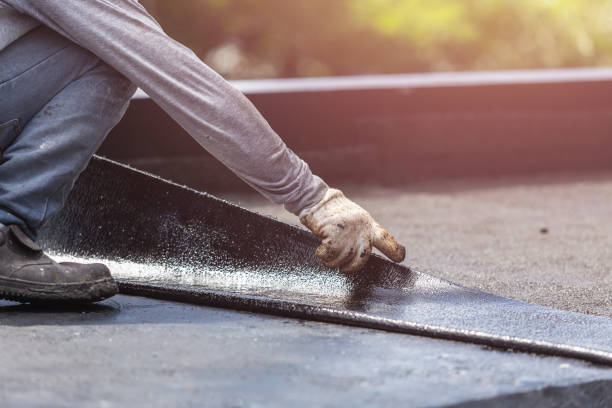
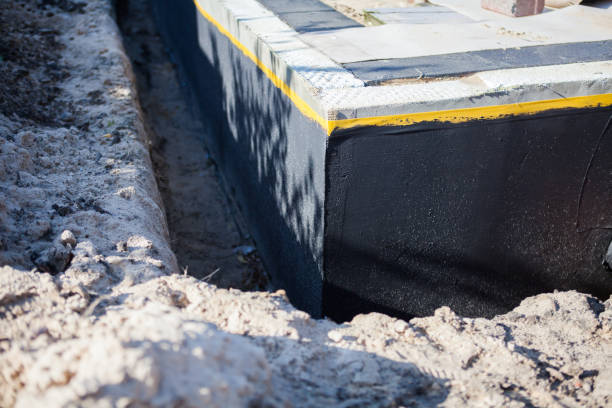
Polyurethane injection is specified for cracks where flexibility is a design requirement rather than structural re-bonding. Polyurethane foam expands as it cures to fill irregular voids completely, including cracks that are not perfectly planar. The cured foam remains flexible, allowing the wall to undergo minor seasonal movement without reopening the seal -- a characteristic that makes polyurethane the right choice for active cracks where temperature-driven concrete expansion and contraction may continue. Polyurethane injection is also used in wet crack conditions because the foam reacts with water during its cure, making moisture in the crack an asset rather than an obstacle to the seal.
Bowing walls in block construction represent a specific category of damage where the masonry units have displaced outward of plumb due to lateral soil pressure. Depending on the degree of bowing, repair options range from carbon fiber strap reinforcement that stops further movement to wall anchor systems that attach to stable soil beyond the active failure zone and provide a mechanical load path that reduces the net lateral pressure on the wall. Our structural assessment determines which approach is appropriate based on the measured deflection, the soil conditions, and the construction history of the wall.
Six targeted repair services covering every foundation crack condition in Rock Hill, SC homes.
Structural epoxy injection bonds the two faces of a poured concrete crack together with a cured material that exceeds the tensile strength of the surrounding concrete, producing a truly permanent structural repair.
Polyurethane injection is the correct choice for actively weeping cracks where water presence would compromise epoxy adhesion -- the foam reacts with moisture to accelerate its cure and seal the void from the inside out.
Strap installation requires no excavation of the foundation exterior, minimal removal of interior finishes, and leaves a wall surface that can be painted over after the bonding adhesive cures.
Wall anchors can be tightened over time as the soil condition allows, potentially restoring some of the original wall plumb position without excavation or more invasive structural work.
We repair stair-step cracks by tuck-pointing the affected mortar joints with a compatible mortar mix matched to the existing wall, reinforcing corner crack locations, and applying a crystalline waterproofer to the repaired area to prevent water intrusion at the newly bonded joints.
The joint where a poured concrete wall meets the footing is a construction cold joint that is prone to opening as the wall and footing settle and move at slightly different rates, creating a direct water pathway into the basement.
Crack mapping, moisture readings, and wall plumb measurements are documented in a written report that accompanies your quote.
We match the repair method to the specific crack condition -- epoxy for structural re-bonding, polyurethane for active water and flexible seal requirements, carbon fiber for bowing walls.
Carbon fiber installations include verification of bond strength and strap spacing against the engineered design before the job is signed off.
Your warranty packet includes installation photos, crack condition documentation, and recommended monitoring intervals for any cracks assessed as stable but worth tracking.
We had a 14-foot horizontal crack in our block wall that two other companies dismissed as not serious. JCB Waterproofing and Construction came in, took actual measurements, and explained exactly why it needed carbon fiber straps immediately. The repair looks clean and the wall has not moved since.
I was told by two contractors that my diagonal cracks were just cosmetic. JCB Waterproofing and Construction measured the crack width at three points and showed me they were widening. The epoxy injection repair was completed cleanly and the cracks have been stable for over a year.
Our basement had a floor-wall joint that was allowing water in during every heavy rain. JCB Waterproofing and Construction sealed it properly with hydraulic cement and a polyurethane bead. No water in two rainy seasons since. Clean, professional work.
Don't let a small crack become a structural emergency. Contact JCB Waterproofing and Construction for a written evaluation and quote in Rock Hill, SC.
Call +1-866-476-1348 Now